

When buying a used motorcycle, you’ll need to gather essential documents to guarantee a smooth transaction. Make sure you have proof of identity, a signed title, and a bill of sale that outlines the details of the purchase. Don’t forget proof of insurance and your financial documentation. Understanding payment methods is vital too. Completing the title transfer process properly is key. Stick around, and you’ll discover more insights on making your purchase seamless!
Proof of Identity

When you’re ready to buy a used motorcycle, having proof of identity is vital, as it verifies that you’re the legitimate buyer in the transaction. This could be your driver’s license or another government-issued ID.
Along with your proof of identity, make sure you have a signed title from the seller, which is essential for the title transfer process. You’ll also need proof of insurance to ride legally. If you’re financing, financial documentation is important too.
Seller transparency is key, so don’t hesitate to ask about the motorcycle’s history; understanding any past issues can protect you from future headaches.
Gathering these documents will empower you, providing a solid foundation for a smooth and liberated purchase.
Bill of Sale
When buying a used motorcycle, a bill of sale is vital for documenting the transaction.
It should include essential information like the motorcycle’s details, purchase price, and the names of both the buyer and seller.
Don’t forget to check if signatures and notarization are required to make it legally binding.
Purpose of Bill of Sale
The Bill of Sale serves as an essential document in the motorcycle purchasing process, ensuring both buyer and seller have a clear record of the transaction.
It provides important proof of identity and outlines the motorcycle’s history, giving you confidence in your purchase. This document confirms the signed title and is critical for title transfer, protecting your rights as a new owner.
Additionally, having proof of insurance and any financial documentation is key for transaction safety. The Bill of Sale ties everything together, serving as a safeguard against potential disputes.
Essential Information Included
A well-crafted Bill of Sale includes key information that protects both you and the seller during the motorcycle transaction. This document should clearly state your proof of identity and the motorcycle’s details, ensuring everyone knows what’s being exchanged.
It must feature a signed title from the seller, confirming their ownership and readiness for a title transfer. Additionally, include proof of insurance to safeguard against potential liabilities.
Don’t forget to document payment methods, whether it’s cash or financing. Finally, always request seller documentation, such as motorcycle history, to verify its condition and avoid potential pitfalls.
This essential information creates a fair, transparent process, empowering you in your motorcycle purchase journey.
Signatures and Notarization Requirements
Signing the Bill of Sale is a critical step in finalizing your motorcycle purchase. This document serves as proof of identity and confirms the transaction between you and the seller.
Make certain the bill of sale includes the signed title, reflecting the title transfer necessary for ownership. You’ll also want to provide proof of insurance to guarantee you’re covered once you hit the road.
Familiarize yourself with local laws regarding notarization requirements, as some states may require a notary’s signature. Before sealing the deal, confirm payment methods and inquire about the motorcycle’s history to avoid any surprises later.
This thorough approach not only protects you but also empowers your journey into motorcycle ownership.
Signed Title
When buying a used motorcycle, obtaining a signed title from the seller is essential for a smooth ownership transfer.
This document not only proves your new ownership but also requires the seller’s signature to make it valid.
Understanding the title issuance process can help you avoid any potential issues down the road.
Importance of Title Transfer
Understanding the importance of a signed title transfer can save you from future headaches and legal complications. When you buy a used motorcycle, obtaining the signed title from the seller is vital for proving ownership. This documentation helps guarantee transaction safety and protects you from potential scams.
Without a proper title transfer, you risk disputes over motorcycle history or ownership claims. Always request a bill of sale along with the signed title, as this further solidifies the ownership transfer process.
Seller’s Signature Requirement
One essential step in buying a used motorcycle is obtaining the seller’s signature on the title. This signed title serves as proof of ownership and is important for the title transfer process. Without it, you risk complications in registering your new ride.
Always confirm the seller’s proof of identity to guarantee transparency and trustworthiness. Alongside the signed title, a properly filled bill of sale is essential for your documentation.
Don’t forget to ask about the motorcycle history to verify you’re making a sound vehicle purchase. By securing these documents, you protect yourself from potential scams and lay the groundwork for a smooth transaction.
Embrace the freedom of the open road, knowing you’ve covered all your bases!
Title Issuance Process
To guarantee a smooth title issuance process for your used motorcycle, you need to focus on obtaining a signed title from the seller. This title acts as proof of ownership, so make certain it’s properly filled out.
Don’t forget to secure a bill of sale that includes all essential details about the transaction. You’ll also need proof of identity, like your driver’s license, and proof of insurance for the motorcycle before proceeding with the title transfer.
Familiarize yourself with local laws regarding these documents and payment methods. Always verify the motorcycle history to avoid potential pitfalls.

Proof of Insurance
Since you’re considering buying a used motorcycle, having proof of insurance is vital for a smooth transaction. This documentation not only protects you but also guarantees safety and fairness in the process.
Here’s why you need it:
- Legal Requirement: Many local laws mandate insurance for motorcycle ownership.
- Financial Security: It safeguards you against unexpected accidents or damages.
- Trust Building: Proof of insurance shows the seller you’re serious about the motorcycle aesthetic and responsible ownership.
- Facilitates Title Transfer: Without it, you might face delays in completing the paperwork.
Gather this critical proof of insurance alongside other documentation to confirm your motorcycle history is clean and your payment methods are secure.
Enjoy your ride with peace of mind!
Financial Documentation
When you’re ready to buy a used motorcycle, understanding your financial documentation is key.
You’ll need to evaluate your payment method options, gather any financing documents if you’re not paying cash, and budget for additional costs like taxes and registration fees.
Being prepared with this information not only streamlines the process but also helps you make informed decisions.
Payment Method Options
Choosing the right payment method is essential when buying a used motorcycle, as it affects both your financial security and the transaction’s smoothness.
Here are some options to take into account:
- Cash: Quick, straightforward, and often preferred by sellers.
- Bank Transfer: Secure and traceable, guaranteeing you have proof of payment.
- Certified Check: Offers security for both parties, reducing the risk of fraud.
- Financing: If you’re financing, make sure you have the necessary financial documentation ready.
Financing Documentation Requirements
How can you guarantee a smooth financing process when buying a used motorcycle? First, gather your proof of identity—like a driver’s license—and confirm you have a bill of sale filled out with motorcycle details.
You’ll also need a signed title from the seller to verify ownership. Don’t forget proof of insurance; many lenders require it before granting financing.
Make sure your financial documentation is in order, especially if you’re not paying cash. Discuss various payment methods with the seller, confirming they align with local laws.
Finally, be ready for a title transfer at the DMV, as this is essential for legally owning your new ride. Get these documents ready, and you’ll be set for a seamless experience!
Budgeting for Additional Costs
While you focus on the excitement of buying a used motorcycle, it’s crucial not to overlook budgeting for additional costs.
Here’s a quick checklist to guarantee you’re fully prepared:
- Proof of insurance policy for the motorcycle: You’ll need this before hitting the road.
- Financial documentation if financing or using non-cash payment: Keep your options open.
- Prepare to discuss payment methods and financing options: Understand your budget.
- Ascertain readiness to complete the title transfer at the DMV: Don’t let paperwork hold you back!
Be aware of local laws regarding vehicle purchases and watch for red flags during your inspection.
Proper documentation is essential for a smooth transaction, empowering you to ride with confidence.
Importance of Proper Documentation
Proper documentation is essential when buying a used motorcycle, as it not only safeguards your investment but also fosters trust between you and the seller.
Having proof of identity, like a driver’s license, is critical for verification. A bill of sale outlines the terms, while a signed title guarantees a smooth ownership transfer. Proof of insurance is necessary for legal riding, and it protects against scams by providing a paper trail.
Additionally, these documents serve as legal backing, giving you recourse if issues arise. Knowing the motorcycle’s history is important, too, as it reveals past accidents or repairs.
With proper documentation, you’re not just buying a motorcycle; you’re securing peace of mind.
Checklist for Motorcycle Inspection
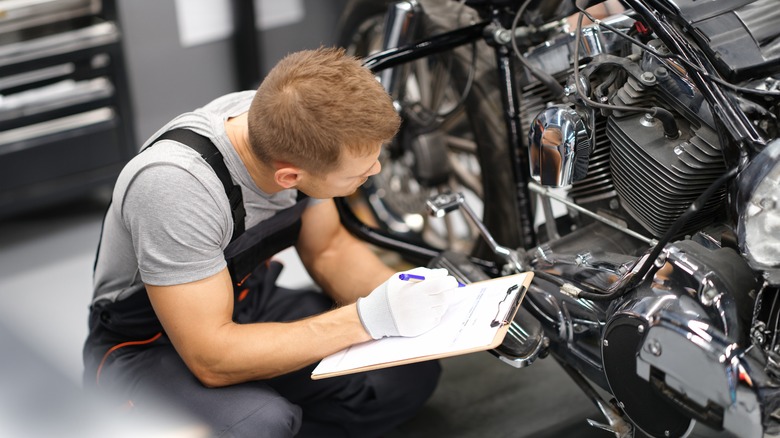
When inspecting a used motorcycle, having a thorough checklist can make all the difference in guaranteeing you don’t overlook essential aspects. Here’s what to focus on:
- Tires: Check their condition and tread depth to guarantee safety and performance.
- Brakes: Assess their efficiency—your safety depends on them!
- Electronics: Test components like headlights and signals for proper functionality.
- Motorcycle History: Inquire about mileage, past accidents, and maintenance records—this is vital for informed decision-making.
Don’t forget to gather seller documentation and proof of identity, and confirm the bill of sale and title transfer are ready.
A solid checklist will empower you on this liberating journey.
Preparing for the Transaction
After you’ve completed your checklist for inspecting the motorcycle, it’s time to get ready for the transaction itself. Gather your proof of identity, like a driver’s license, and guarantee you have a pre-filled bill of sale that includes all motorcycle details.
You’ll need a signed title from the seller and proof of insurance to ride legally. If you’re financing, prepare your financial documentation, too. Familiarize yourself with the motorcycle’s history to discuss its value confidently. Additionally, ensure you understand the minimum insurance coverage requirements to adequately protect yourself while riding.
As you meet the seller, be ready to negotiate payment methods and finalize the title transfer at the DMV. Knowing local laws regarding vehicle purchases will help you navigate the process smoothly and liberate you to hit the open road with confidence.
Understanding Payment Methods
While maneuvering the purchase of a used motorcycle, understanding your payment options is essential. Here are some payment methods you may consider:
- Cash: Offers immediate ownership and simplifies the process.
- Bank Transfer: Secure and provides proof of payment, minimizing fraud risks.
- Financing: Allows for manageable payments, but requires financial documentation and interest considerations.
- Credit Card: Offers protection against scams, but be aware of potential fees.
Ensure you have your proof of identity, bill of sale, signed title, and proof of insurance ready.
Each payment method comes with its nuances, so pick one that aligns with your financial capabilities and goals.
Title Transfer Process
Completing the title transfer is a vital step in finalizing your motorcycle purchase.
You’ll need to gather key documents: proof of identity, a signed title from the seller, and a bill of sale that details the transaction. Don’t forget proof of insurance for your new ride!
Make certain to verify the motorcycle history, as it can reveal important details about past accidents or maintenance.
When you meet the seller, discuss payment methods, confirming everything aligns with your financial plan.
Once you’ve secured these documents, head to your local DMV or equivalent authority to complete the title transfer.
This guarantees you’re legally recognized as the owner and can ride freely, knowing your motorcycle is officially yours.
Local Laws and Regulations
Understanding local laws and regulations is essential when buying a used motorcycle, as they can vary considerably from one area to another.
Familiarizing yourself with the following items will guarantee a smooth experience:
- Proof of Identity: Always have your driver’s license handy.
- Bill of Sale: Secure a pre-filled bill detailing the motorcycle’s specifics.
- Signed Title: Confirm the seller provides a signed title for proper title transfer.
- Proof of Insurance: Make sure you have valid insurance before hitting the road.
Red Flags to Watch For
What should you look out for when buying a used motorcycle? Watch for red flags that signal trouble.
If the seller’s unwilling to provide proof of identity, signed title, or other essential documentation, that’s a warning sign. Lack of transparency about the motorcycle’s condition or hesitation when discussing its history raises suspicion.
Be cautious of unusual payment methods or terms; if it feels off, it probably is. Always compare the listing to the motorcycle’s actual condition—any inconsistencies should make you reconsider.
Frequently Asked Questions
How Do I Verify the Motorcycle’s VIN?
To verify the motorcycle’s VIN, you’ll check it against documentation, like the title and registration. You can also search online databases or contact the manufacturer for any reported issues or history linked to that VIN.
What Should I Do if the Title Is Lost?
If the title’s lost, contact your local DMV to request a duplicate. You’ll likely need proof of ownership and identification. Don’t forget to check for any specific forms or fees required in your state.
Can I Buy a Motorcycle Without Insurance?
While you might dream of riding free, you can’t buy a motorcycle without insurance. It’s not just a legal requirement; it protects you from unforeseen road hazards, ensuring your journey remains thrilling and safe.
Are There Additional Fees When Purchasing?
Yes, there are often additional fees when purchasing. You might encounter sales tax, registration fees, and title transfer costs. Always check with your local DMV to understand the total expenses involved before finalizing your purchase.
How Can I Negotiate the Purchase Price?
Think of negotiating like haggling at a market. Start by researching the bike’s value, then confidently present your findings. Listen to the seller, but don’t hesitate to counter their price with your fair offer.